| home | cob | links and suppliers | lath and lime repairs | breathable paints | breathable insulation | carpentry | lime plasters and renders |
|---|

Jack in the Green builders (run by Glyn Tyler) are based in Mid Devon. Please see the bottom of this page for details of how to contact us.
See our main lime page for more information on
Throughout history, lime mortars have held together everything from Egyptian pyramids and medieval castles and cathedrals, to rural farms and town houses. Lime mortar mixing was an important and technically demanding trade but has gradually died out since lime was overtaken in popularity by sand and cement mortars.
In recent years there has been a revival in the use of lime mortars in the sympathetic conservation and renovation of traditional buildings but also new builds and green-eco homes. In part this is for the mechanical properties of lime but also because of its environmentally friendly credentials.
The principal difference between a lime mortar and a lime plaster or render is one of consistency. All three are made from either hydraulic or non hydraulic lime mixed with sand and water. Whilst lime mortar is predominantly a building material, used to bind together masonry, lime plasters and renders need to be spreadable and may therefore contain more water and a finer aggregate.
It is commonly supposed that purpose of lime mortar is to stick masonry units such as brick and stone together. Although this can be the case with sand and cement mortars, lime mortars do not set super-hard.
Instead, the purpose of lime mortar first and foremost is to provide a cushion to spread individual masonry loads evenly. As lime does not ‘stick’ stonework together, this means that traditional stonework produced with a lime mortar will be held together through craftsmanship rather than cement.
The makeup of traditionally constructed walls differs from region to region, according to local tradition and the workability and quality of available building materials. Whilst some walls contain mortar throughout, some use little mortar in their construction. Historically, the use of lime as a mortar also depended on the purpose of the wall, for example walls for barns and animal stabling are often drystone in construction. Before mass production and the availability of cheap transport, lime was expensive and only used where necassary. In many areas, clay-rich subsoils, rather than lime, were used as mortar.
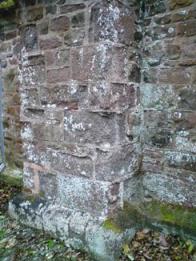
Traditionally constrcuted walls act as a holistic breathing system whereby different building elements work together with the natural environment to keep buildings dry.
The golden rule governing the relationship between mortar and the materials that it binds is that the mortar should be softer or equal to those materials. A soft lime mortar will take the brunt of the weather, form a porous surface for water to escape the walls and draw harmful salts away from masonry.
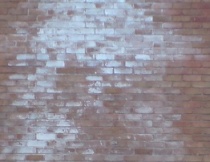
When set, sand and cement mortars are non-porous and harder than many rocks. As water cannot be released through mortar joints, it is often forced out through the building material. As well as the possibility of forcing damp back inside buildings, common affects of this are salt stains and the ‘popping off’ of exterior brick and stonework. This leaves distinctive pock-marks and can also be identified by sand and cement pointing standing proud of stonework.
Many older stone buildings, or those incorporating cob or timber, shift and move subtly over time or with the seasons. As sand and cement mortars set hard and are rigid, this natural movement can cause cracks, especially when it has been used to repair traditional materials. Soft, durable and breathable lime mortars however, will move with other materials, and have self-healing properties.
The durability, porosity and breathability of lime mortars promote healthy buildings and can also be treated as a ‘sacrificial’ material, cheaper and easier to replace than the materials they bind. The inherent breathability of lime does mean that lime mortars degrade over time-measurable in decades if not centuries- which is why it is often necessary to repoint stonework within older buildings and walls.
It is important to re-point walls where the original lime has degraded. Not just a cosmetic effect, stone and brickwork can destabilise if left too long without pointing.
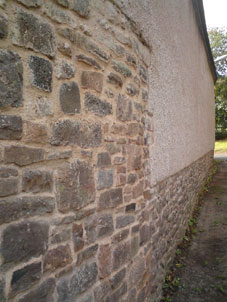
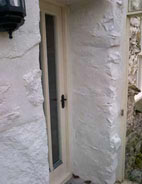
Lime mortars consist of sand mixed either with non hydraulic lime putty or bagged natural hydraulic lime. Although Non-Hydraulic lime is softer and more breathable, Natural Hydraulic Limes (NHLs) are suitable for re-pointing stonework in particular where limework is close to ground moisture (more about NHLs).
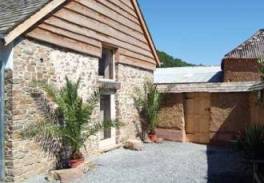
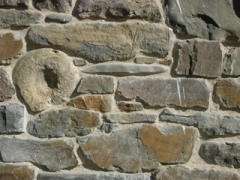
Sympathetic conservation work often demands like for like replacement of building materials. This means that the colour and texture of the aggregate must be in keeping with its surroundings. This can mean sourcing sand from local quarries and/or the scientific analysis of old mortar to find an appropriate match. This picture to the left illustrates the use of local sand in the lime mortar. Below right, local subsoil formed part of our mortar mix, which was an exact match to undamaged pointing on the building.
Lime pointing can also be limewashed, which can help to protect it from the elements.
The re-pointing process has three main stages. This first, ‘raking out’, involves cleaning out old mortar, plant life etc. between the masonry units to be re-pointed. This can be quite laborious in particular if sand and cement mortar has been used in the past. The spaces created between stones should be at least twice as deep as they are wide, and left with a square (cornered) edge so the lime has a key and doesn’t fall out. The second stage is filling in, pushing the lime mortar between the stones until it is stands slightly proud of the stonework. The mortar is then left to cure until leather hard, when it is brushed off to the required depth and finish.
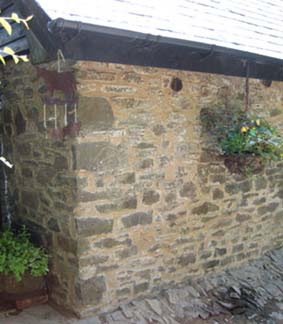
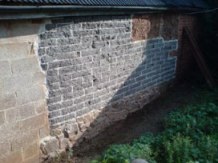
Below are 'before' and 'after' images of a wall of a Grade II* listed longhouse in Cornwall repaired and pointed by Jack in the Green. The work included the survey and archaeological recording of the wall, and replacing the numbered stones in their original positions. Existing lime mortar was replicated through the use of local sands.
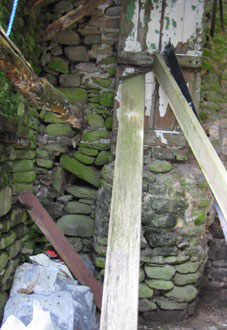
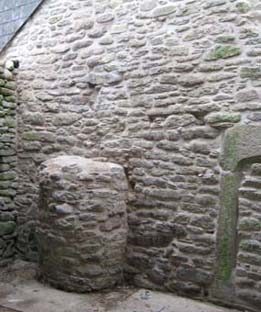
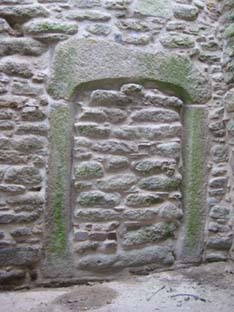
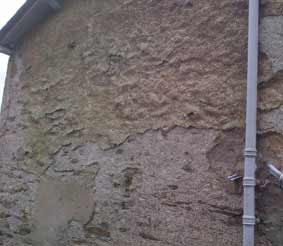
Many areas of western and northern Britain are prone to wind-driven rain. Where walls are in exposed locations or catch the weather, these have often rendered and/or wetdashed. Historically, if not fully rendered, walls were often pointed (or slobbered) full to the face of stonework, with several coats of wetdash and limewash then applied. Over time, the wetdash coats have often degraded and fallen away, leaving the flush pointed finish exposed.
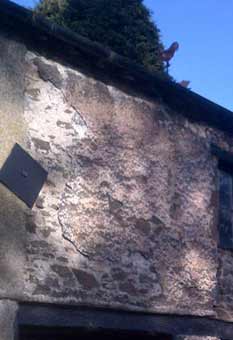
Wetdashing, or harling, common along Britain's western coasts, is a lime mix often containing a large aggregate which can look much like modern pebbledash. Along with the limewash applied onto it, dashed or harled coats stop rain from penetrating stonework, the aggregate forming a large surface area which stops rainwater running down walls and lets it dry out with the help of the wind and the sun. When dashed or harled coats degrade, wind driven rain may penetrate the pointed wall beneath and cause problems with damp.
Read more about dashing and harling traditions in Scotland and the west in this article by Craig Few at Building Conservation.com.
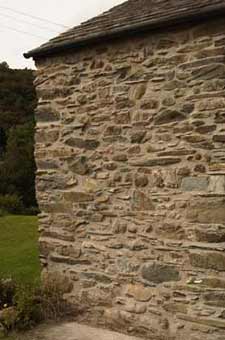
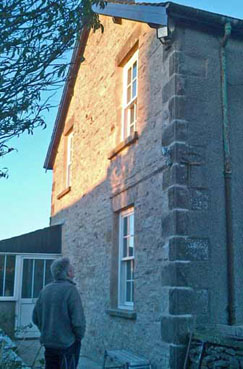
A common problem with formerly dashed or harled walls is that once the dashed coat has degraded, walls appear as if pointed. If such a wall has problems with damp, simply re-pointing may not stop water ingress. Furthermore, modern fashions for, or wishes to 'see the stone' mean pointing is often brushed back too far between the stones, so they are clearly visible. Some stonework was never meant to be seen, walls having been built to be rendered or roughdashed (ie for thier weather protective qualities rather than thier aesthetic ones!)
Building work done in the past (such as rendering or repointing in cement based materials) would have been expensive, and therefore rarely undertaken without good reason. When planning to alter a finish (i.e. removing render from stonework and replacing it with pointing) we should always take into consideration why the work was done in the first place. Specific finishes should be replaced like for like, even if you plan to replace cementitious materials with lime. So if you have problems with damp on a wall which is routinely exposed to extreme weather (whether is is currently rendered, dashed or pointed in lime or cement), be aware that simply re-pointing in lime may not always be the answer! If in doubt, take advice from an architect or a surveyor qualified in conservation building.
Link to our main lime page for more information on
| lime plastering | cob | home | lime and lathwork repair | breathable paints | carpentry | breathable insulation | links and suppliers |
|---|
or telephone 01884 829584
