
| home | lime plastering | lime and lathwork repair | lime pointing | carpentry | suppliers and links |
|---|


 Most modern household paints are made from a concoction of chemicals most of which contain petroleum by-products from the oil industry. Production is hazardous and uses a lot of energy; One tonne of paint produces about ten tonnes of waste, much of which is highly toxic. Most paints (especially gloss) contain VOCs (Volatile Organic Compounds) such as acetone, white spirit, trichloroethylene, isopropyl alchahol and methylethyl keotone. These evaporate during use and, drying as fumes, contribute to ozone depletion and are harmful to crops, animals and people. They often cause nausea and dizziness, and can contribute to asthma and other respiratory problems.
WHO (World Health Organisation) cancer research has found that because of the contents of modern paints, decorators faced a 40% increased chance of contracting cancer, and deemed painting to be a carcinogenic activity. In Denmark, ‘painter’s’ or ‘solvent’ dementia is a fully recognised disease. So be kind to yourself, to the planet- and to your painter and decorator- by taking less harmful options!!
Modern traditional paints might be made from traditional materials but this doesn’t necessarily make them ethical or particularly environmentally friendly. Some, for example contain gelatine (not so good it you are veggie, and also very smelly), whilst others can contain lead and other metals, as well as pigments produced in unethical and environmentally harmful ways.

Basically paint is pigment (particles of colour made from chemicals, minerals, metals, plant extracts etc.) suspended in an oily substance. The oily substance acts both to hold the pigment in suspension so you get a consistent colour across your substrate (whatever you are painting on to), and to make it easily spreadable. Modern paints use plastics to suspend chemically derived pigments, and thinners such as white spirit and methylated spirits make it spreadable. Although most use naturally derived mineral pigments, some 'traditional/historic’ paints use materials such as gelatine and formaldehyde to suspend and thin their pigments.
Most paint companies provide a list of ingredients (especially web-based ones) and are required by law to tell you if VOCs are present in their product. So always read the label or technical information where available.
Breathable paints provide not only decoration but also act as the first line of defence for lime plastered/rendered walls. Not only for general damage caused by everyday wear and tear, but also against moisture ingress, breathable paints differ from synthetic chemical based paints in that instead of acting as a waterproof barrier, they allow the substrate to breathe read about the breathability of lime plasters and renders. Breathable eco paints can be split into two main types: traditional mineral based paints/washes such as limewash, distemper, casein, mineral silicate paints and those, more akin to the texture of modern paints, but based on plant oils rather than synthetic products.
 are mineral pigments dissolved in water. Limewashes and distempers can be coloured with natural powdered pigments but as they do not contain a suspension ‘product’ they do not spread thickly/evenly. This means they often need to be applied several times and need quite a lot of working in to achieve a consistent streak-free finish. Traditionally, linseed or tallow was added to these to waterproof them for exterior use or to help them spread more easily. Lime and silicate paints can also be used for painting exterior surfaces, please see our breathable external paints page for more details.
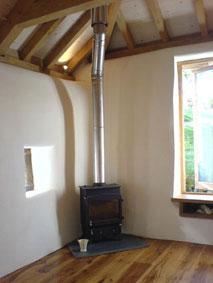
Lime plaster-new or old, should be limewashed or painted with breathable (microporous) paints. Decorating lime with synthetic paints forms an impermeable barrier which stops lime, and the wall to which it has been applied, from breathing. Limewash should be understood in the same terms to the layers of lime plaster/render beneath it. Rather than a ‘paint’ it is in fact the final layer of lime to be applied. Instead of ‘drying’ on the wall like paint, limewash needs to carbonate to set. Like lime plaster or render, it is necessary to thoroughly wet down the wall before application, to aid in the carbonation process but also to stop the layers beneath ‘sucking back’ the water which may make the lime carbonate too quickly. Limewash applied improperly (without regard to regular wetting down) will 'chalk off' when rubbed with fingers, clothes or children!
Limewash is only appropriate for application onto lime-based backgrounds and will not cover modern paints, plasters or wallpaper. There are lime based paints on the market which will cover different backgrounds (internal and external). These are expensive compared to regular limewash and can contain plastic based additives. Make sure you do some research and get the right product for the job! Advice on limewash from the Society for the Protection of Ancient Buildings

There are two main types of distemper on the market. Soft distemper is basically chalk and/or lime dust suspended in a glue traditionally made from rabbits. It is extremely friable and can often be identified as a chalky residue which comes off on fingers/clothes/children etc. For this reason is often found applied to ceilings and walls in low traffic areas. Distemper is thicker than limewash and to identify it on previously painted walls/ceilings, stick a fingernail in it. Limewash will usually be hard and come off in thin layers. Distemper is relatively soft, chalky and thickly applied in coats c.2mm in depth.
WARNING! Emulsion of any kind applied to soft distemper will crack and blister as the paint dries. It will not cover. Although some modern petrochemical primers/sealers can cover distemper (but are not breathable), the only real way to deal with it is complete removal. Although not actually difficult, this is a very wet chalky nasty business indeed!!! Advice on soft distemper from the Society for the protection of Ancient Buildings.
The second type of distemper available varies in relation to the substances that have been added to it. These to either make it harder/more durable or washable, or vary according to the use of modern glue to hold its mineral content together.

Casein is also called ‘milk paint’ as casein is the major protein found in milk and is made by drying coagulated milk curd. When mixed with an alkali, usually lime, the ingredients combine to form calcium caseinate-a powerful glue and paint binder. Casein isn’t washable so like distemper should only be applied to low traffic areas, and ideally applied to absorbent surfaces. It is best finished with oils, waxes and paint glazes to give more durable washable/wipeable surfaces.
Conservation professionals may specify the application of limewash, distemper or casein to new or existing wallcoverings. If you live in a listed building or in a conservation area you may be required by law to conserve and maintain the character of your house. Although it is often assumed that this relates only to the building’s structure, it can apply to traditional paintwork. If you are thinking about changing the character of wallcoverings in a listed building, make sure to check with your local conservation officer first. Follow this link to English Heritage for further advice.

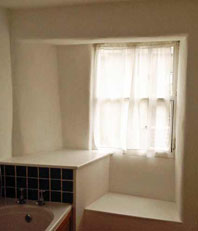
Natural eco-emulsions can also be coloured and tinted with natural earth and mineral pigments. These are made in a variety of ways and from a variety of ingredients. Natural breathable paints are significantly better for human health, the environment, and for buildings to which we apply them.
The vast majority are breathable (microporous), but do be careful to make sure, and check out the technical advice/ingredients sheet. All of those specified here are VOC free and breathable.
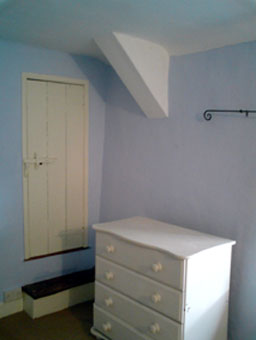 Coverage depends on your house and what you’re trying to paint onto. Whilst most natural emulsions will paint over lime and gypsum plaster, and most will cover wallpaper and other clean dry wall coverings, because they lack the chemicals present in modern paints, they will rarely cover oil based paints, traditional or modern.
Natural and breathable glosses, eggshells and oils for treating and colouring wooden surfaces are also available from most suppliers (see below).

One alternative to natural eco-emulsion is clay paint. As it is mineral based, it compliments newly plastered lime and will also cover old lime plastered walls, gypsum and other paintwork. Being relatively thick it is especially useful for covering a multitude of sins! Unlike other eco-emulsions, clay paints absorb moisture and even out humidity, reducing condensation. As such they are particularly suited to kitchens and bathrooms. Although a number of companies manufacture clay paint, Earthborn Paints have won a number of awards, the most presteigous of which is the EU's Ecolabel. Earthborn paints are the only UK based eco-paint company to meet Eco-Label's strict environmental standards.

Breathable silicate paints are available for internal and external use. Silicate paints are mineral based and work on the same general principles as limewash but are based on burnt quartz (potassium silicate). Silicate paints are only suitable for covering mineral surfaces so will not cover modern paints and wallpaper. Refer to our silicate paint page and silicate paint suppliers for more details.
A word of caution: despite many claims otherwise, few natural oil/water based paints are completely ethical or environmentally friendly. It really is a case of choosing your poison. Some use white spirit, formaldehyde or other harmful thinners, and others use titanium oxide, used to improve coverage and opacity of many natural as well as ‘brilliant white’ paints. Although it is completely non-toxic, and despite being in plentiful supply, there is significant environmental impact here because of the amount of energy used to manufacture it and the significant waste this produces.
All in all however, the good by far outweighs the bad, and its really just a case of surfing the web, deciding on your ethical/environmental stance, picking the colour you want, and buying the stuff!!.
Always read the technical advice/ ingredients sheet. All good quality ethically produced/environmentally friendly paint manufacturers will specify their ingredients. To cover lime, remember the paint you use will need to be specified as 'breathable' and/or 'microporous'. If these words are not included in the spec for the paint you are looking at, then find a different supplier! This page is meant only for general advice. We do not sell paint and we take no responsibility for the manufacturers or products listed below. Browse the links below, our external paints page and/or look at our general links page for further advice from specialist organisations, and for details of useful books.
If you'd like further advice, or would like us to do some painting for you, please get in touch via the means outlined below.

Ecos organic paints
Biofa natural paints
Osmo breathable wood stains waxes and oils
Earthborn natural paints and varnishes

| home | lime plastering | lime and lathwork repair | lime pointing | cob and mud building | carpentry | suppliers and links |
|---|


 The decorating industry makes choosing paints confusing by promoting the ‘plus’ sides of their products without outlining some of their detrimental aspects. Although most DIY superstores do not stock modern ‘breathable/VOC free’ paints, many do have ‘traditional’ or ‘historic’ paints. The purpose of this page is to address some FAQ’s about the available products, and to act as a resource by providing links to advice pages and both traditional and modern breathable paint and limewash manufacturers/suppliers.